The Dichotomy of Loyalty
Your Republic Is Calling You is a novel by South Korean author Kim Young-ha published in 2006, 10 years after the release of his critically-acclaimed novel “I Have The Right To Destroy Myself”. This novel revolves around an abandoned North Korean spy known in the South as Kim Ki-yong as he navigates two difficult decisions in the span of 24 hours regarding a sudden order from Pyongyang that could change his life. We look through a dialectic lens to analyze the consequences ideological division has had on the Korean Peninsula since 1953 & the rapid changes in Korea throughout the late 20th century.
The story focuses on ‘Kim Ki-Yong’, the alias used by the protagonist (born Kim Seong-hun) who is an abandoned DPRK spy living as a foreign film importer in Seoul under the false identity of a lost orphan. He is a trained graduate from the Operations Class at Kim Jong Il University of Political and Military Science, commonly referred to as Liaison Office 130.
Your Republic Is Calling You is similar to Choi In-hun’s 1960 novel, Gwangjang (광장 — The Square). However, Gwangjang deals with the early stages of the division of the Korean peninsula from the 50s to the 60s, whereas this novel looks at a later period of time in South Korea between the authoritarian regime to the Neo-liberalization of society during the 80s and 90s.
A family man on the surface with a wife and daughter, his true task under Lee Sang-Hyok’s office was to assimilate into the ROK so as to monitor and influence affairs in local towns within the country for the DPRK’s interests, then afterwards to enroll into a South Korean university to infiltrate student-led democracy movements at a time where student unions were gaining traction in the ROK during the 80s and 90s in reality.
However, following the purge of Lee Sang-Hyok after a factional struggle, Ki-yong was left with no orders from Pyongyang since the purge and so were the other spies he knew of until one day, he suddenly receives a cryptic e-mail from what appeared to be the Office ordering him to return back to base within the next 24 hours.
Throughout the 24 hours in which this book is set, the author paints an image of South Korea from the perspective of an assimilated Northerner. In Ki-yong’s story we see emotions varying from paranoia to instability caused by grief, and it’s through his navigation of Order 4 that we look into his mind and get the complete image that we often miss a piece of in mainstream media that’s often a one-sided narrative.
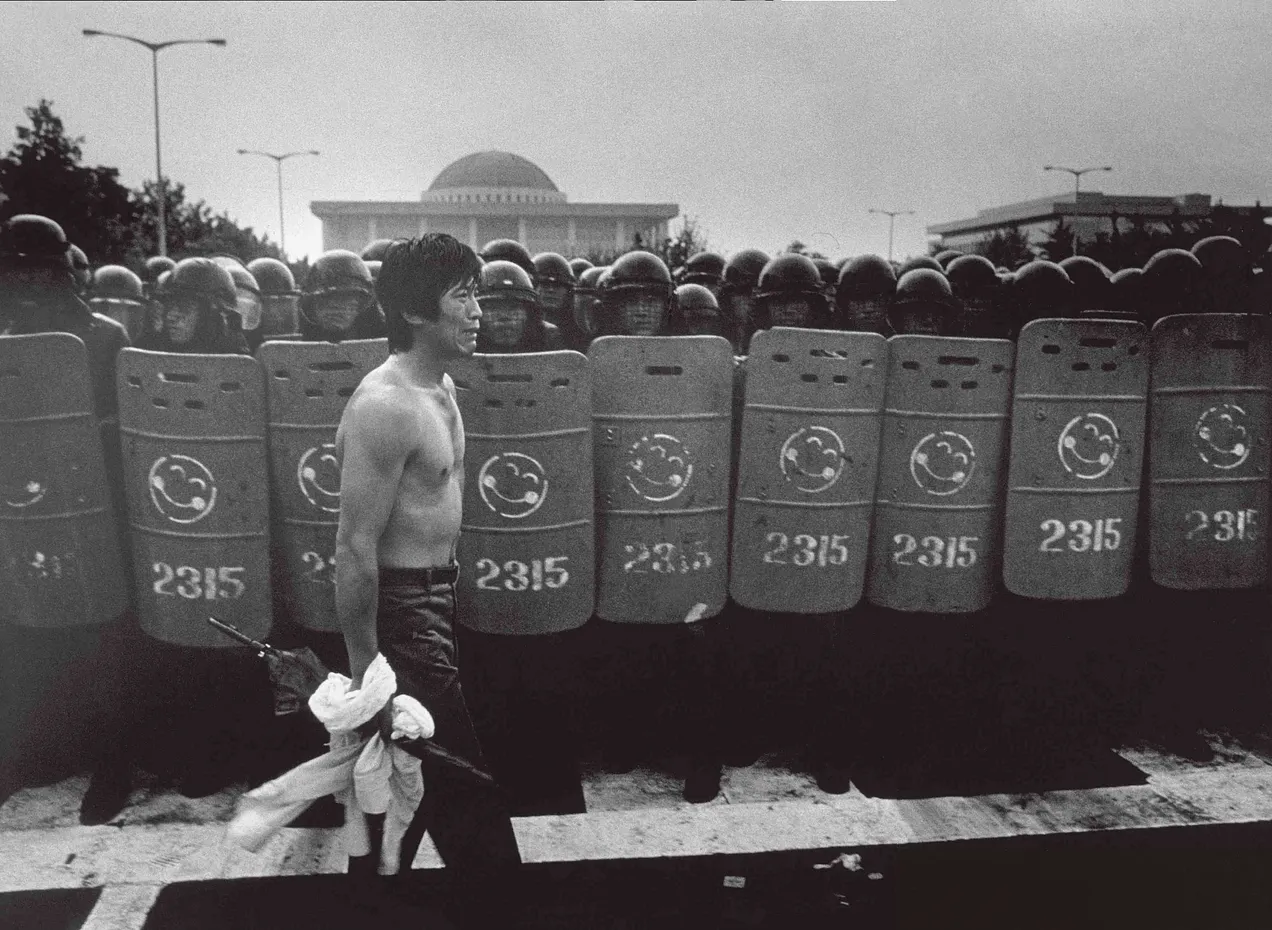
I realised more and more that the demonisation of the DPRK in favour of glorifying the ROK was not as fair as it seemed from the first glance. Kim Ki-yong’s infiltration of the south was analogous to a period of time in the real-life ROK where student unions were an important force in [South] Korean politics through the 70s & 80s, it was shortly before and around this period of time that the south was actually just as dictatorial as the North. Events such as the Gwangju Struggle show the extent of this ugly facet of the south at the time, many of these in student unions were Marxists so they were targeted by the government for political dissidence. We see one of the main characters in the story - Ma-ri - who grew up in Gwangju look back on this event.
 a
a
Both countries come from similar roots, the DPRK started out as a Soviet-aligned satellite state and the ROK started out the same way as an American-aligned satellite state. Both were influenced by foreign ideologies that turned out to be divisive and the beginning of a lifeless peninsula’s decay. The North, in it’s attempt to create a classless society — has become what it swore to destroy, essentially a tyrannical fascist quasi-republic with a rigid class system and an economy that’s been struggling since 1991. So the South was historically better, right? I’d reconsider - the ROK was built by multinational family-owned monopolies into a meretricious dystopia where the intellectual class have their minds numbed by the draconian school-system and corporate competition. It may not be as horrible today, but throughout most of it’s history - it was a tyrannical dictatorship on top of all this, so what was the difference really?
Ki-yong places emphasis on the negative attributes of the South, although he grows more accepting of the negative attributes the North had too even as a Northern man who grew under the propaganda of the DPRK. While the DPRK is indeed a failed state, one should note the hypocrisy of media in depicting the ROK as well. Seeing this, you realize the truth behind the nation that’s adored worldwide for it’s music bands, food, comics, and modern technology — it’s just the whitewashed version of an unfortunate reality.
Unification under two opposing ideologies that historically were just as totalitarian as each other and failed their goals is no longer a desired or wise goal. The Degenerated Workers’ State against the Corporation-owned Capitalist Dystopia. The Kim regime is one that has betrayed the cause of the class struggle but the multinational monopolies like Hyundai and Samsung should not be given the opportunity to further their fortune by exploiting North Koean workers and demoralizing children. Is there really a significant difference between a capitalist autocracy and a social autocracy? Neither serve the people, but both have varying kinds of atrocities.
While this strays from the topic of the book, my iteration of things ties in to the image painted by Kim Young-Ha in this novel. It’s exactly this “defeatist lifelessnes” as described by Ki-yong that I’m talking about in detail. However, despite the fact that this book portrays a cynical view of South Korea, it’s a post-ideological novel (at least from the main character’s perspective.) and is equally critical of the life found in the DPRK.
Aside from Ki-yong’s reality in the South, later on throughout the middle of the book we get more revelations from his childhood years. The author uses everyday items such as Harmonicas to describe the type of architecture in the Pyonyang’s apartment complexes Ki-yong grew up in during the 80s, which I found very intriguing.
 b
b
Ki-yong’s experience at Lotte World (p. 80) was one of several turning points in the novel where we see him enter an ideological confusion, he describes his fascination with the place. In the North, people often fought in long lines for events and privileged party members cut the line, so it wasn’t even the rides that fascinated him - but the behaviour of the people around him. Although it was a relatively common activity, the author made the most out of it by comparing it to something unexpected.
Reading this, I wondered whether he was actually ever in the North (or that there was a surprising amount of information on Northern life in the South.) given the detail and vividness that his descriptions of the DPRK held. It felt more realistic than most documentaries, even with the negatives and tragedies.
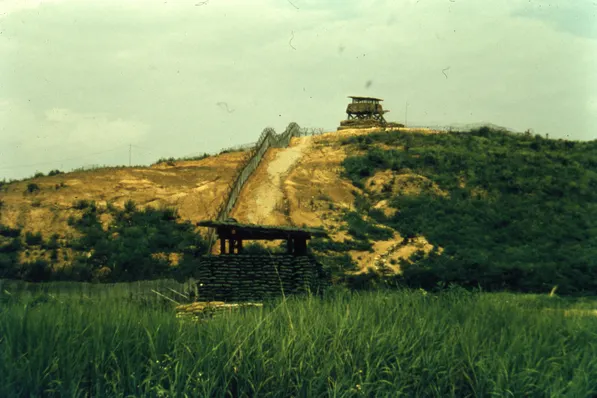
I found out later that Young-Ha grew up on next to the (ROK) DMZ, as his father was stationed there and he had a glimpse into the DPRK through his childhood experiences. Yet even then, such details were not the sole aspect of the book that could catch your attention, the vividness of emotion was unparalleled, and honestly I could not put down the book.
After some time passed, a clinging guilt tempered his anger. If he had listened more attentively to Mother’s complaints, if he had come home a little earlier instead of playing basket-ball with his friends, no, if he had never been born . . . Uneasy thoughts dogged him, tormented him. p. 98
As the narrative unfolds, Ki-yong’s internal conflict intensifies, embodying the struggle of a man torn between two worlds that claim but offer no solace. The ideal of freedom, which he allowed the South a chance to showcase during his time as an agent, begins to feel like a pipe dream rather than a light at the end of the tunnel. Replaced by a creeping sense of disillusionment, he sees the society that prides itself on progress and democracy reflect a distorted image. He confronts the nightmares he once thought were a relic, returning decades back in time to confront the life he left behind as he watches the home he’s subconsciously made shatter before his eyes.
Kim Young-ha’s critiques both North and South Korean systems for their historic hypocrisy and faults, showing how thousands of families in history shared Ki-yong’s fractured reality between these extremes. His wife, Ma-ri, and daughter, Hyon-mi, are no longer anchors, representing the precariousness of his situation instead. In the dawn of his frustration, Ki-yong, a man divided by two worlds, cannot wholly embrace either side - he turns out to be nothing but an outcast, ultimately belonging nowhere.
In the end, the novel paints an image of a peninsula that has never been more divided, where unification under two opposing ideologies seems not only undesirable, but unrealistic, too unrealistic to hold hope for in some. Ki-yong’s defeatist lifelessness encapsulates a broader, existential crisis—one that neither North nor South has resolved. Kim Young-ha’s novel is a mirror through which the reader reflects not only on the division of Korea but on the divided nature of humanity itself in a fallen world. Ki-yong is both the victim and perpetrator of this reality, a man whose journey home is nothing more than a journey into exile.
Citations
A. ROK DMZ Fence & Guard Towers constructed by the 2nd Engineer Battalion — Credit; U.S. Army Corps of Engineers USACE, Aug 1968. B. Farmer in tears after being trampled on and having his shirt torn by the police during the South Korean American beef import protests in 1988. His tears were scattered in the rain and protest.